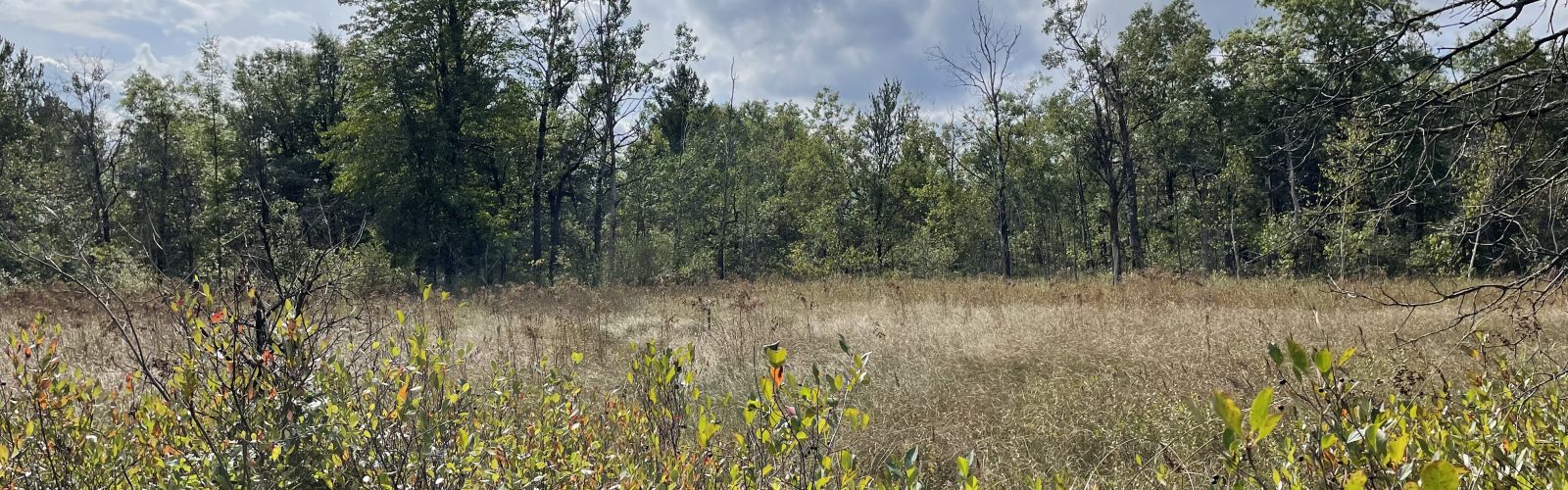
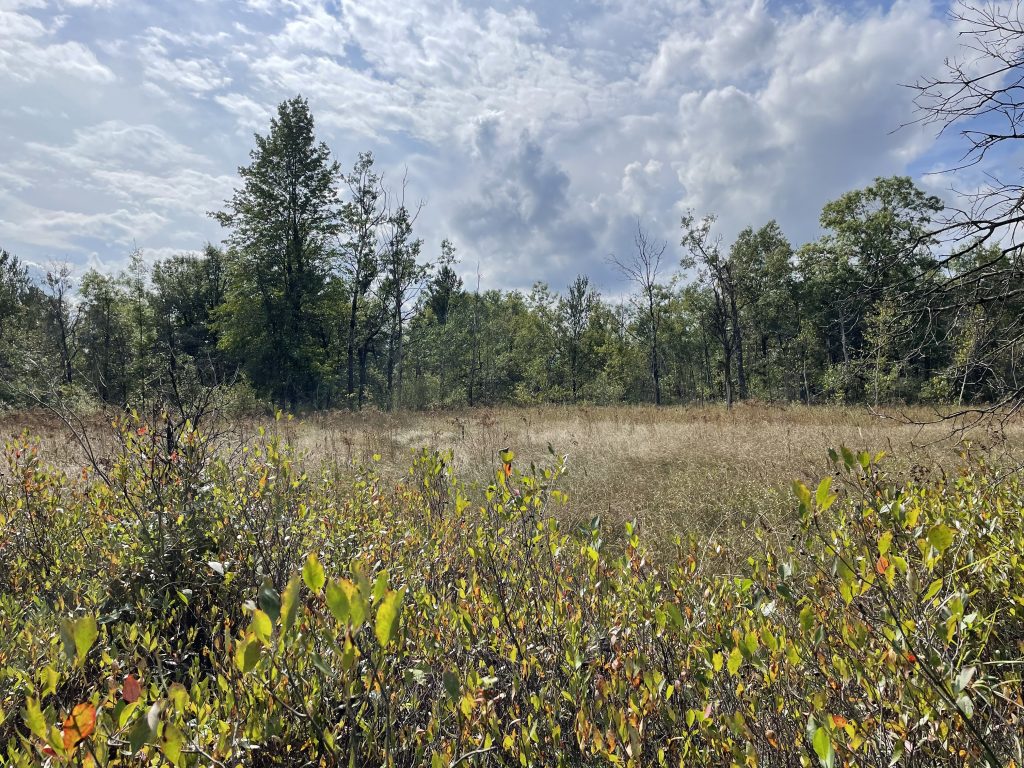
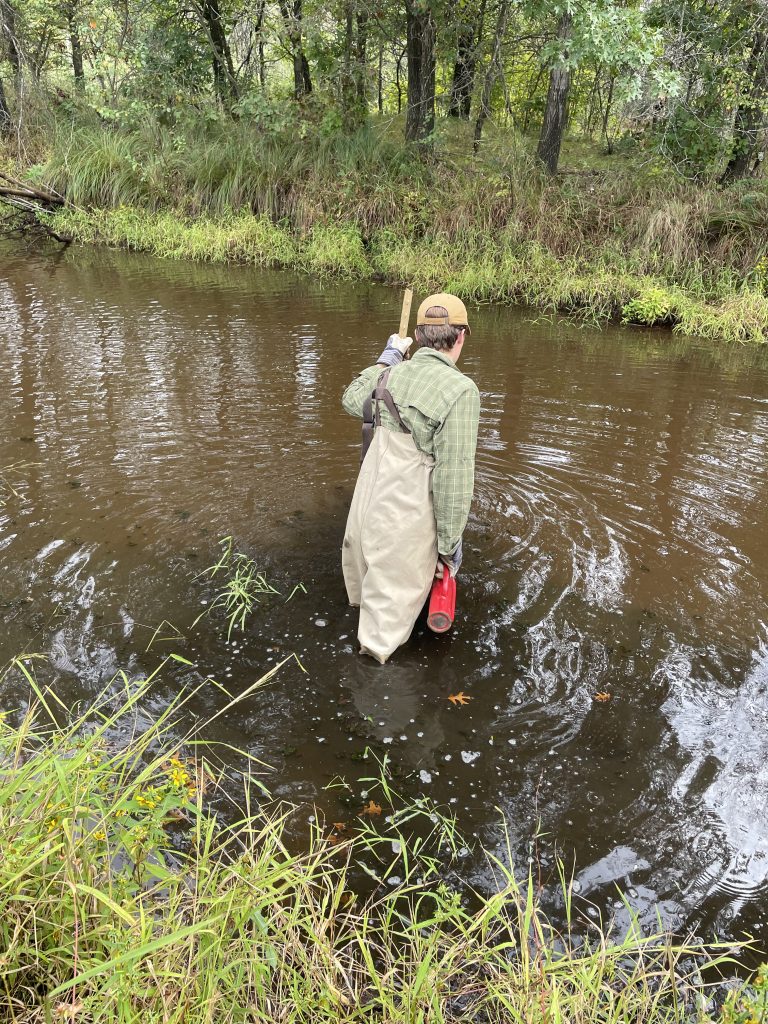
The wetlands in Necedah National Wildlife Refuge (NNWR) formed thousands of years ago as glaciers receded. The area was ditched in the early 1900s to control the water and develop the rich, organic soil into farmland. This “drainage dream” era did not last long without healthy wetlands to protect from fires and floods, but the disturbance severed connections between aquifers, surface water, and floodplains.
Land managers have developed restoration plans that involve plugging the ditch networks as a nature-based solution to address drainage-related flooding issues in nearby communities. Intact wetlands provide invaluable ecosystem services including water quality regulation, flood control, carbon sequestration, and habitat support. Peat, which dominates the watershed, exhibits high storage and transmissive capacity. Hydrologic outcomes of peatland restoration work are highly uncertain; therefore, this project addresses the need to quantify groundwater and surface water exchanges to effectively guide management efforts.
Keywords: Groundwater-Surface Water Interactions, Wetland, Restoration, Ecosystem Services
Previous Restoration Efforts
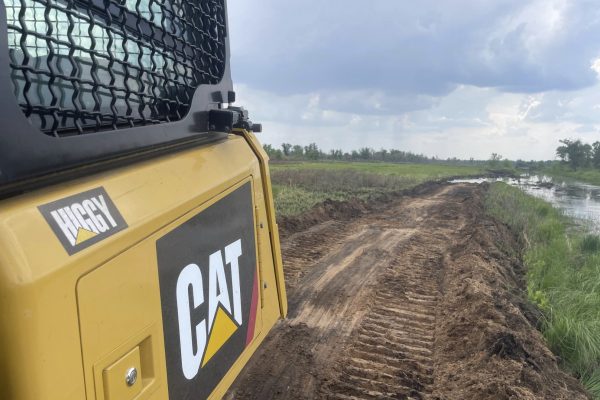
The U.S. Fish & Wildlife Service and WI DNR are integral project collaborators. Check out this StoryMap about their ongoing work in the area to reconnect the Little Yellow River channel and floodplain.
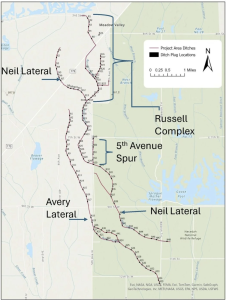
The map on the left illustrates proposed ditch plug locations on select laterals throughout NNWR.
Our Team:
- Jillian Lukez, Graduate Student
- Brad Strobel, NNWR Wildlife Biologist
- Josh Eash, NNWR Hydrologist
- Zachary Knab, WI DNR Wildlife Technician
Questions:
- What is the impact of plug-style restoration on hydrologic exchange fluxes, specifically, surface water-groundwater (SW-GW) interactions?
- How do restoration and landscape position affect the amount of total and active GW storage, on the floodplain and in the subsurface?
- To what extent are drainage-induced impacts on peat hydraulic properties reversible?
Approach:
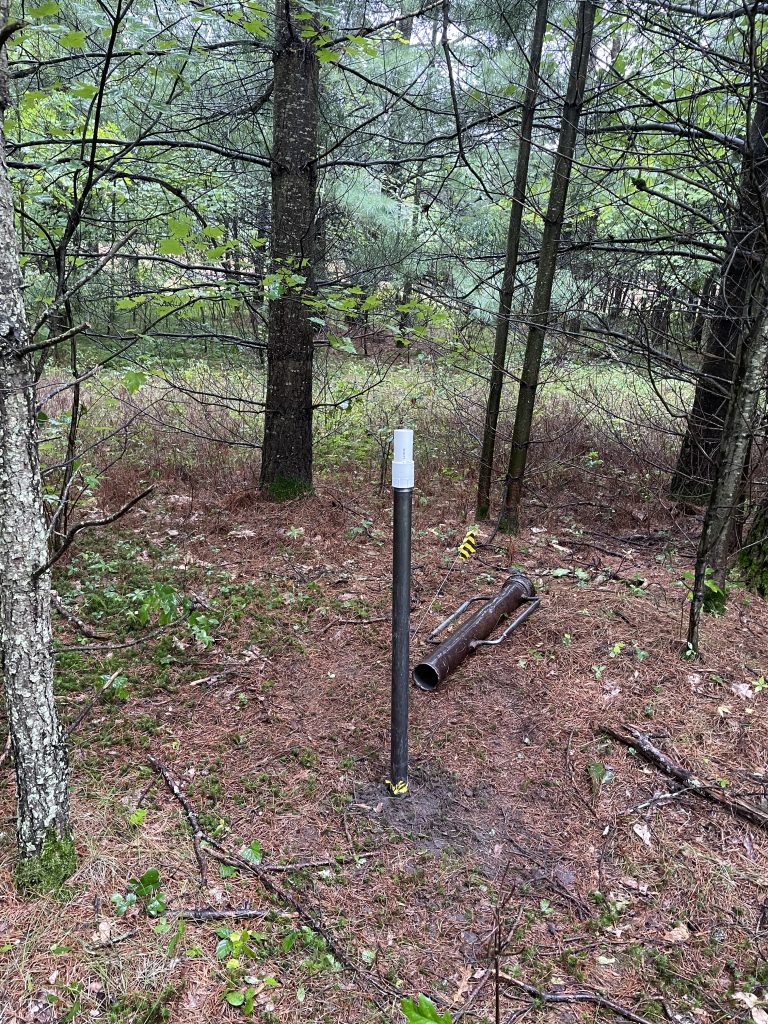
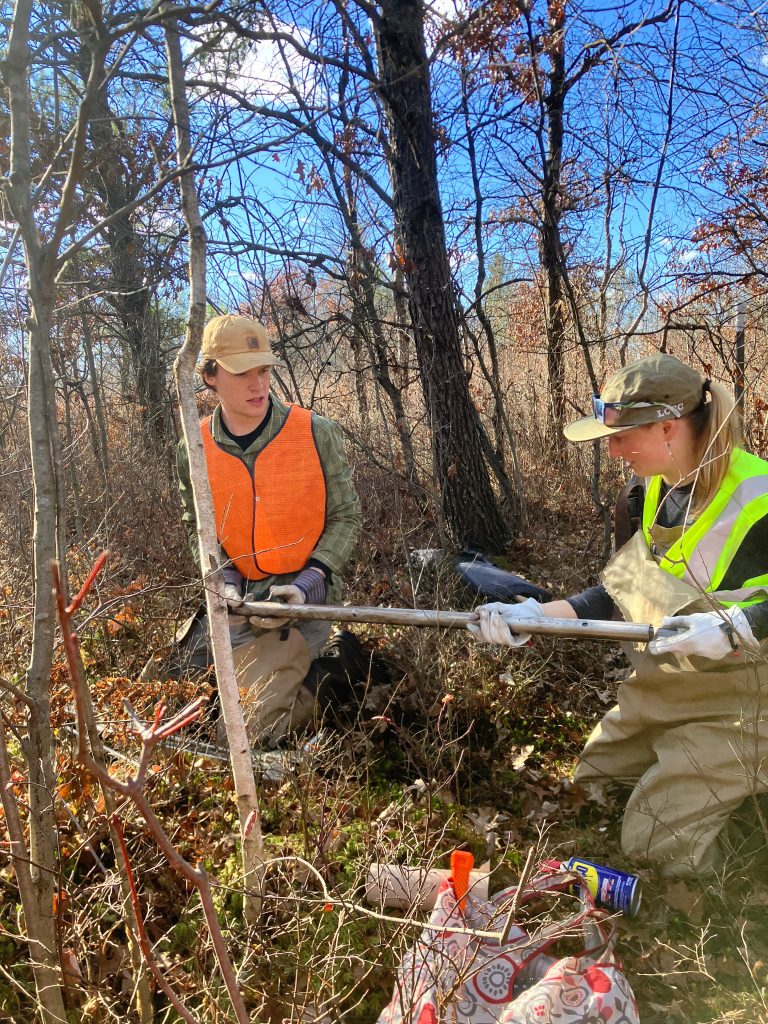
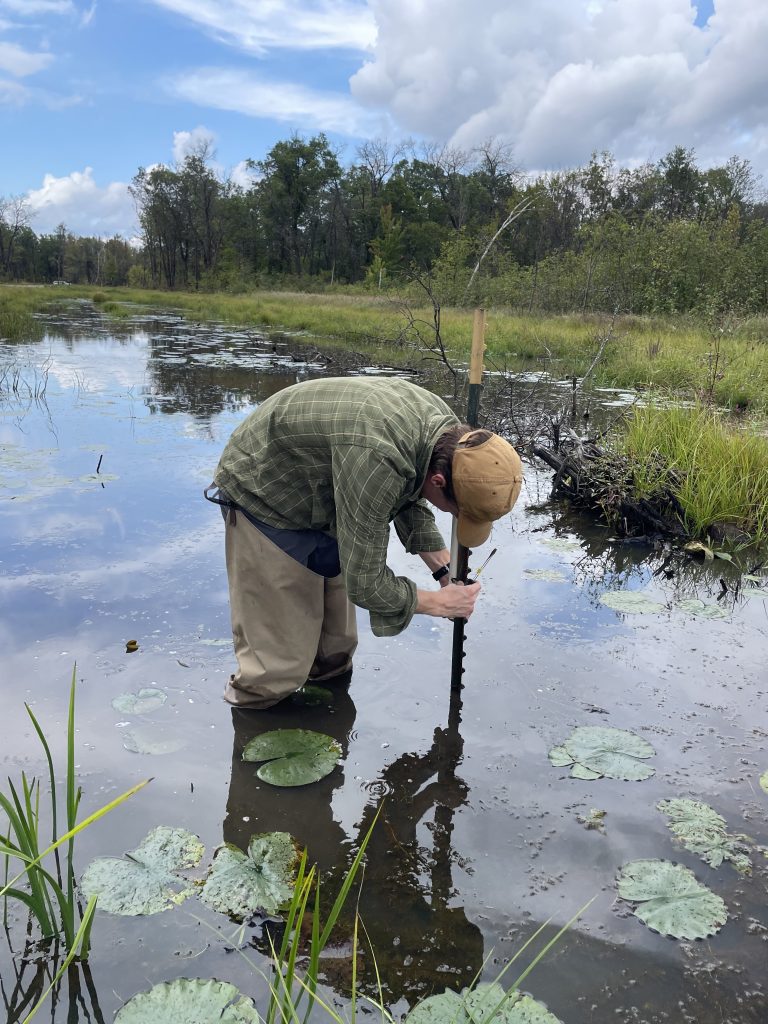
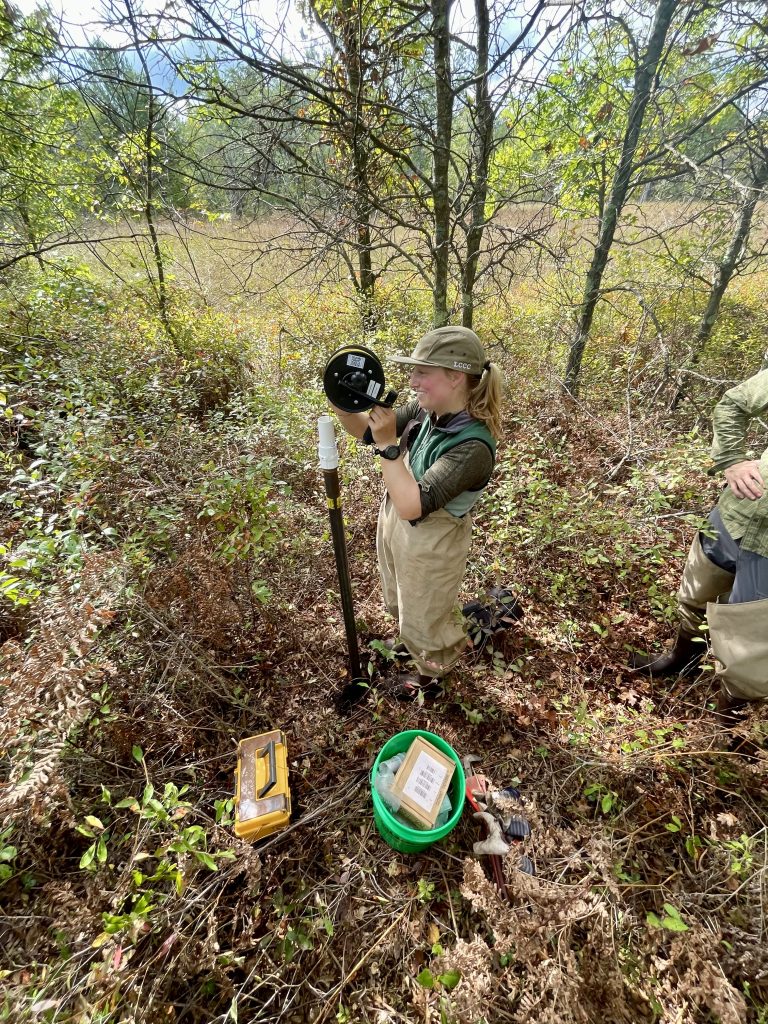
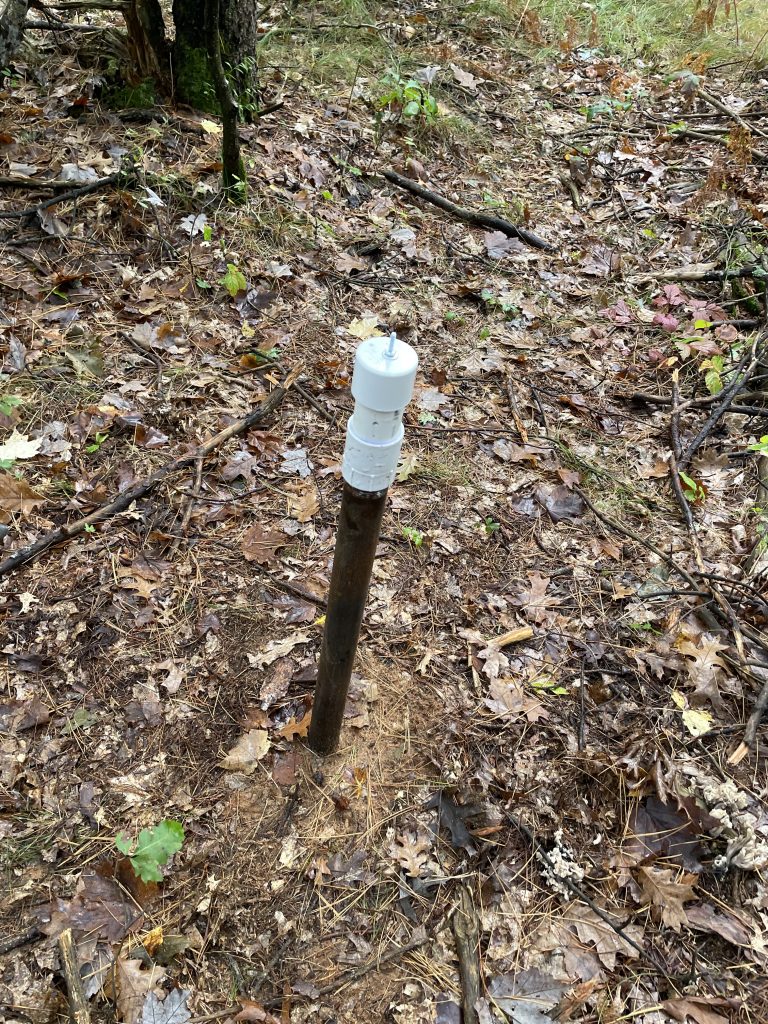
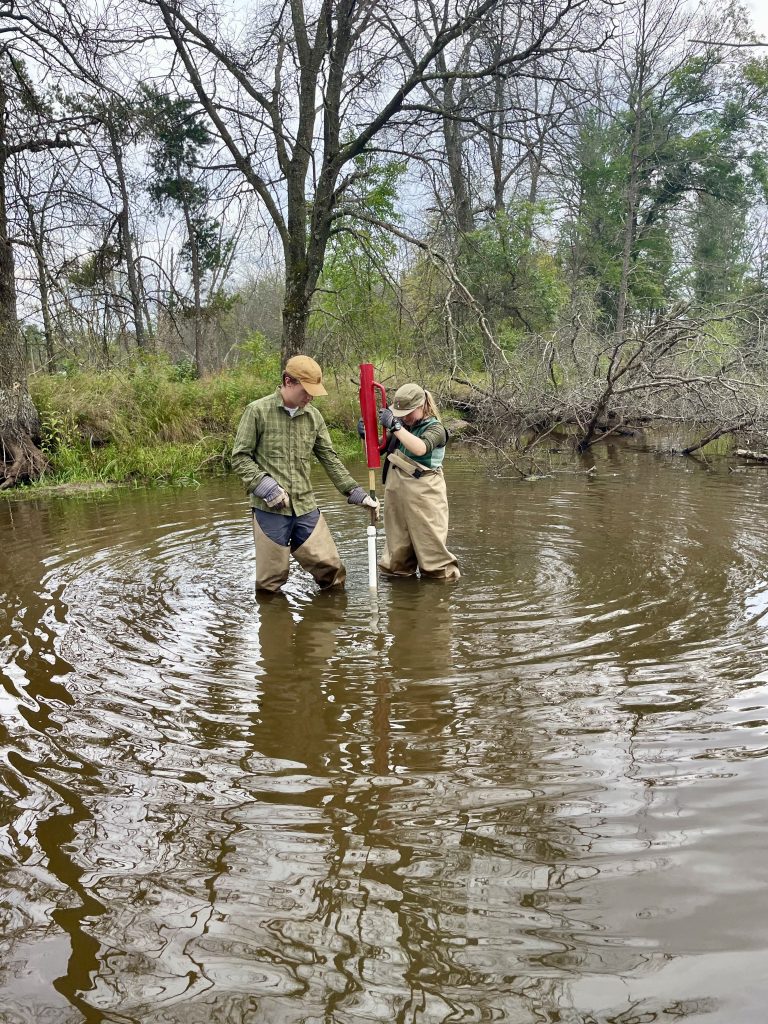
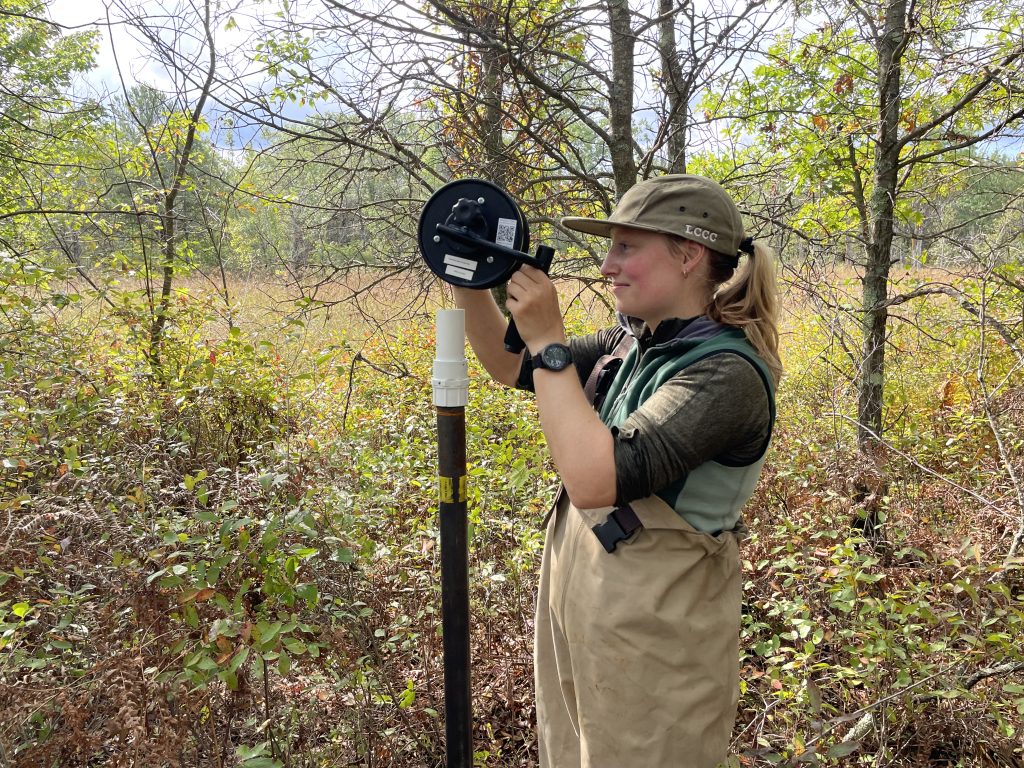
- Field methods: Monitoring groundwater levels and collection of peat and sand cores at three representative peat pots (restored, to-be-restored, unrestored)
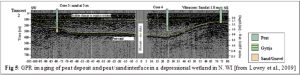
- Analysis: Time series of groundwater gradients and SW-GW fluxes to identify flow gradient reversals, measurement of vertical head gradients in peat pots, hydraulic conductivity of peat/sand layers, calculation of drainable porosity, GPR surveys to characterize hydrostratigraphy
- Modeling: 3D stratigraphic subsurface representation at reference floodplain reaches with interpolated water table measurements
Funding:
Wisconsin Groundwater Research and Monitoring Program (WI Groundwater Coordinating Council – DNR):
- Restoring stream – floodplain – aquifer connectivity in drained peatlands: Quantifying effects of restoration on groundwater storage regimes and hydrologic exchanges (2025)
Findings:
This work is in the preliminary stages. Water level data collected by NNWR collaborators in 2022 show minimal GW gradients to/from the stream at the restored site, and large GW gradients in the unrestored reach. Hypothesized beaver activity has been shown to cause gradient reversals, increase stream stage, and initiate hyporheic exchange.